

The last week of 2025, we tried something different at Stationwise. We canceled the meetings and let everyone work on whatever they felt like building — basically a hackathon.
The result? Fourteen projects ranging from invisible performance wins to AI-powered Slack bots; and a demo meeting where Kevin’s screen share nearly crashed his browser trying to prove how much faster things are now (which feels poetic in a way).
The projects fell into a few natural buckets: things users will love, things that’ll save us debugging headaches and a few that might change how customers think about their data.
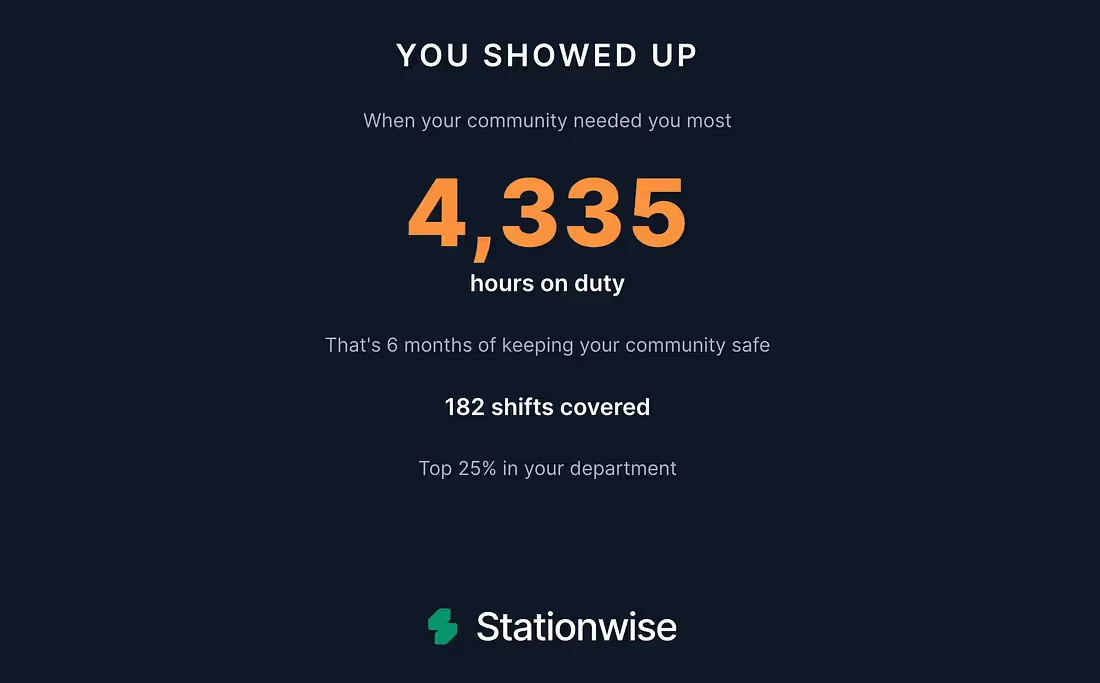
Kadir built a “Wrapped” feature — Spotify Wrapped but make it firefighting. It’s 2026 now, so of course we have a Wrapped too. Your top stations, your most frequent partners, your longest work hours. The admin version also shows department-wide stats like vacancies filled through the hiring engine.
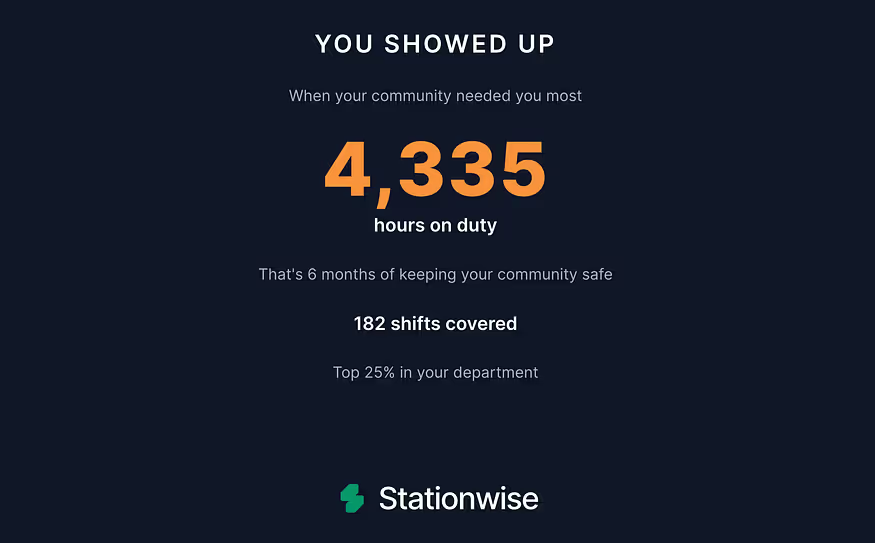
It’s even wilder that he built the core experience in a single day. Kadir has been pushing hard to make AI tools a real part of our workflow and this was the clearest example yet of why that matters.
Ersin tackled a problem we’ve discussed for a while now. Our app is powerful but it has… a lot of buttons. His solution is a global search + action bar; think Spotlight or Slack’s command palette. Type “Leslie Adams” and get options for her profile, calendar or payroll. Type “January 1st” and jump to that date in any view. It’s the kind of feature that turns everyone into a power user (or at least makes you feel like one).

Estefania shipped a small but real UI win: collapse controls in the shift planning editor. When you’re searching for a specific station in a wall of information, collapsing is a lifesaver.
Kevin spent his week on something that looks like it does absolutely nothing. Which, in this case, is a compliment. He rewrote how the roster handles UI updates by using Zustand. The old code considered redrawing the entire page on every interaction. The new approach only redraws what actually changed. Which sounds obvious but wasn’t how things worked before. For fire stations running 10-year-old Dell PCs, this matters a lot.
Alperen dove into logging infrastructure. Async tasks are hard to debug for all the usual reasons: they run later, depend on system state, and tend to fail at exactly the moment you’re not looking. He built a standards file that lets us point an LLM at a feature and say “add appropriate logging”; and it actually works.
Burak wrote end-to-end tests that click through every page and verify it loads. Sounds basic but it replaces manual QA and watching a bot click through the app at superhuman speed is strangely satisfying.
Furkan integrated an AI chatbot into our Slack, trained on customer onboarding channels. Ask it “Why couldn’t Fresno County delete the radio program on December 8th?” and it answers with a link to the actual Slack message. A teammate with perfect memory.
Kadir also prototyped a payroll dashboard that toggles between hours and dollars. If we can ingest cost data, admins could see what overtime actually costs and employees could see estimated pay for accepting a shift. (“This 24-hour shift would earn you ~$X” is apparently a very effective nudge.)
Ibrahim spent part of his week on a staffing list configuration UI which somehow turned into GPU programming. Hackathons tend to do that.

Others used the week to explore refactors, testing ideas and experiments that don’t translate well to a demo or a blog post, including work from Thaddeus, Gulce and Ebrar.
It was fun to review. We’re already talking about doing this again before the end of the year. Possibly sooner, once everyone forgets how tired they were.
And yes, we’re hiring. Check out what we are building at stationwise.com.